About Norma
I spent ten years teaching project managers what to do. Then I started listening to what they were actually asking me.
For more than a decade I have trained and coached project managers — in classrooms, in workshops, on live projects, globally. I am a PMP, a PMI Authorised Training Partner Instructor, a senior lecturer at the Institute of Project Management, and a former board member of the PMI Ireland Chapter.
I start every course the same way. Before I teach anything, I ask the room a question: what is your biggest challenge on projects right now?
I have asked it hundreds of times. In ten years, almost nobody has answered with a schedule.
They talk about the stakeholder who agrees in the meeting and blocks it afterwards. The sponsor who cannot be told the date is not real. The team that has stopped raising things. The colleague who has gone quiet. The information that arrived six weeks too late, when someone in the room had known all along. The team member who won't take ownership.
The people asking were good project managers. They knew how to build a schedule, structure a business case, run a risk register, manage a change control process. And then they would name a problem that none of it touched.
For years I did what most trainers do — I answered from experience, offered a story, and hoped it helped. Because there was no system to point them to.
That is the gap iENGAGE came out of.
Why a system and not just good advice?
There is no shortage of excellent writing on leadership, psychological safety and team dynamics. What was missing was not insight. It was something project managers could use on a Tuesday afternoon, under pressure, without a psychology degree.
Project management solved that problem once already. Work used to live in people's heads until Henry Gantt gave the profession a way to make it visible. Everything that followed — the scheduling, the dependencies, the critical path — was built on that one act of making something invisible visible.
Nothing equivalent exists for the human side. So I built it.
I came into projects from the technical side — a degree in computer science and mathematics, and years delivering the kind of work where the plan really does matter. I am also a qualified teacher, which is probably why I could never leave those answers alone: if something can be learned, it can be taught, and if it can be taught it needs a structure. A postgraduate diploma in design thinking gave me the method for building one, and a master's in business science kept it anchored to what organisations actually need from projects.
iENGAGE came out of that combination — a technical instinct for systems, a teacher's need to make things learnable, and a designer's insistence on starting from how people actually experience the work.
iENGAGE is a leadership system for the conditions projects actually run on: understanding, energy, adaptability, shared direction, and safety — plus a way of sensing whether those conditions are being experienced, rather than merely intended. It is built around a physical cube that sits on a desk, because a model you have to remember is a model you will not use.
You cannot control people. You can lead the conditions in which they succeed.
Why this matters now
The job has changed. Project professionals are no longer judged only on whether they delivered what was asked — they are increasingly expected to own whether it was worth delivering at all. That is a fair expectation, and a much larger one. Most of it runs through people.
The expectation has moved. For most project leaders, the toolkit has not.
What I do
Lead the Conditions →My book on the iENGAGE system, for project leaders who are being asked to own success rather than simply manage delivery.
Workshops →Two-day in-house programmes where teams work the system on their own live projects — and leave with a cube, a completed diagnostic and a ninety-day plan.
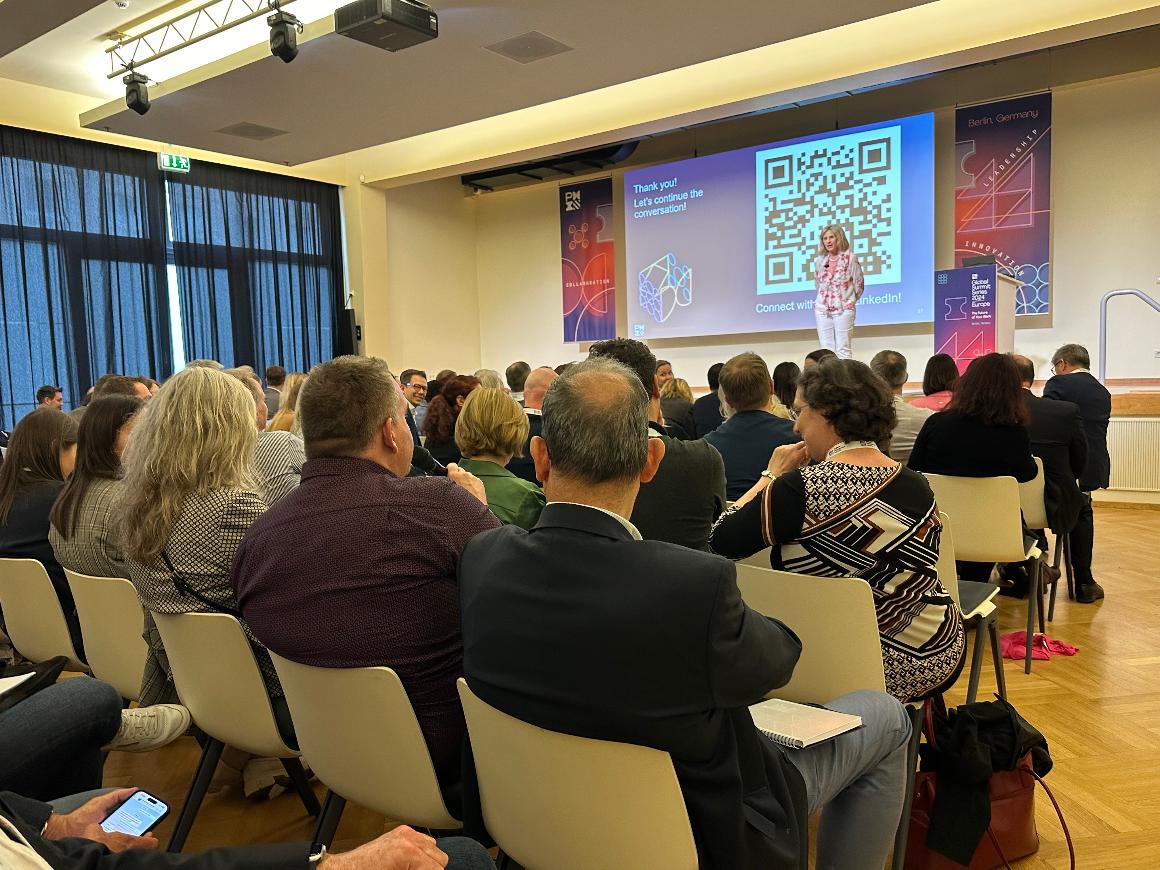
Speaking →Keynotes and conference sessions on the human side of project delivery.
NLC Project Power | Midleton, Cork, Ireland | norma@nl-c.ie | 0879973336 | www.nl-c.ie